



Student Behavior Modification, Physical Education Learning Packets, Student Discipline Learning Packets and Business Education Programs from Advantage Press
Physical Education, Student Discipline, Motivation, Character Education Programs for grades 2 thru 12
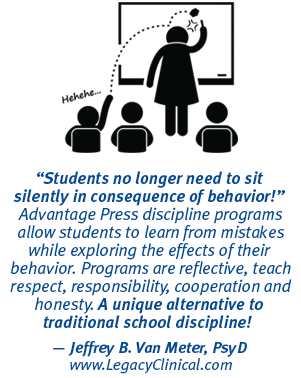
Advantage Press Student Behavior Improvement Programs are designed to provide reflective activities for students who have violated a school or classroom rule. Lessons allow opportunities for students to refocus problem behavior and learn appropriate ways of behaving. We offer Physical Education Learning Packets, Student Discipline Learning Packets and Business Education Learning Packets for grades 2 – 12.
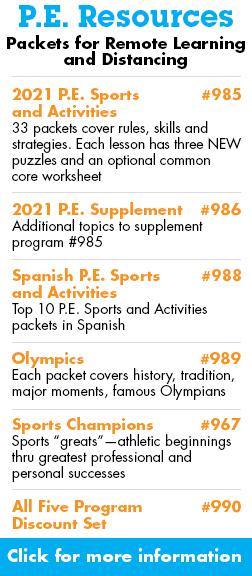
Physical Education Programs for grades 6 thru 12
Outstanding Resource for Remote Learning and Distancing
Advantage Press Physical Education packets are curriculum supplements that focus on a particular sports or physical activity. Each packet provides a 45-60 minute independent learning activity. Packets contain 7-10 pages of readable content followed by student response questions and puzzles for students to demonstrate their learning.
Packets provide students with logical and constructive learning activities, promote reading and writing, and provide the means to assess student learning and justify grades. Read more here.
Advantage Press Behavior Improvement Programs:
- Help students understand why they misbehave and how they can change
- Provide a meaningful consequence for misbehavior
- Show students the importance of following school rules
- Heighten awareness for the implications of our own actions and the need to be accountable
- Lead students to realize, through goal setting, that they are responsible for changing their behavior
- Provide an opportunity for students to reflect on their obligation to self and others
- Establish a connection between effort and behavioral change
- Can be included in most every IEP
Business Education Programs for grades 9+
Preparing for Today’s Workforce: A Curriculum for Teens
This curriculum helps students seamlessly integrate into a work environment through exposure to real workplace problems and their solutions in five critical areas: job expectations, workforce attitudes, customer relations, coworker relations and contemporary workplace issues. This program stresses to students that the best work environment is one in which employers and employees work together as a team, supporting, leading and sharing goals.
Topic specific packets explore and examine:
- Workplace ethics
- Job standards
- Problem behaviors and attitudes
- Conflict resolution
- Suggested best practices
The Preparing for Today’s Workforce Program can be used effectively with all business education students, including those participating in school sponsored cooperative education programs. A separate set of lesson questions help these students to remediate a specific work issue.